2026-09-03 · Rick Calder
Why Treasure Valley Crawl Spaces Flood During Irrigation Season
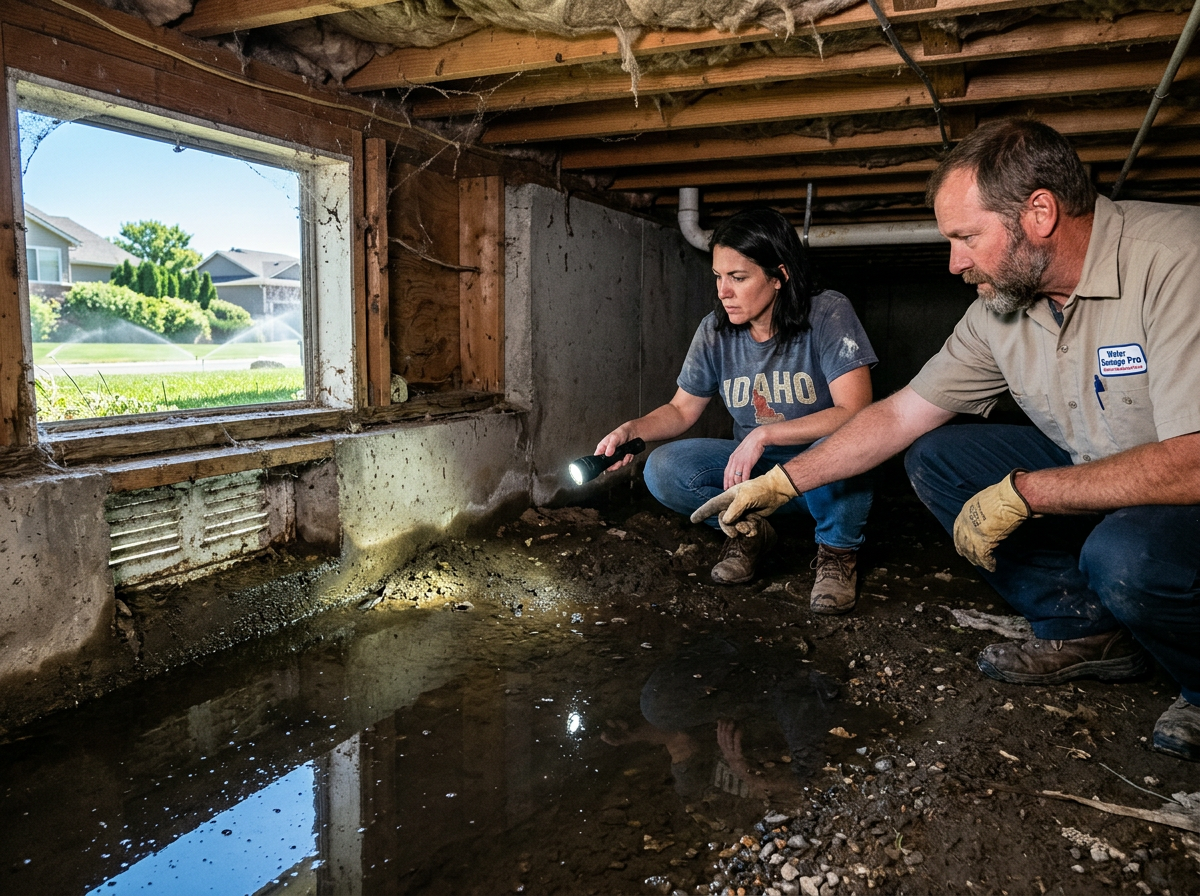
Irrigation season from April to October floods many Treasure Valley crawl spaces because pressurized lines in post-1993 subdivisions develop leaks that raise the shallow water table under back lots. These systems run at higher pressure than older gravity lines, and the shallow placement leaves little soil buffer once the water table climbs. A single pinhole leak can push several gallons per hour into the soil, and the 2,700-foot semi-arid air hides the moisture until it reaches framing or insulation.
How Irrigation Raises the Local Water Table
Pressurized irrigation turns on each spring and keeps the ground saturated through fall. In subdivisions built after 1993 the back-lot supply lines sit only 12 to 18 inches deep, so even modest pressure increases push water sideways instead of downward. When multiple homes run sprinklers at once the combined volume lifts the water table several inches within days. Crawl spaces built on these lots sit at the low point of the lot grade, so any rise in groundwater finds the path of least resistance under the vapor barrier. The semi-arid climate at 2,700 feet evaporates surface moisture quickly, yet the enclosed crawl space stays humid because air exchange is limited. Homeowners often notice damp soil or standing water only after the irrigation clock has run for weeks.
Common Failure Points in Post-1993 Subdivisions
Shallow back-lot lines crack where they cross driveways or tree roots. Joints at the meter and at the valve box loosen from repeated freeze-thaw cycles even though the main irrigation season avoids winter. Once a line breaches, water follows the path under the footing rather than soaking straight down. A typical residential irrigation leak can release 5 to 15 gallons per hour; over a weekend that equals hundreds of gallons trapped against the foundation. Because the air outside feels dry, residents underestimate how much moisture has already entered the crawl space until they see discoloration on floor joists or smell mustiness through floor registers.
Why the 24-48 Hour Mold Window Matters Here
Enclosed crawl spaces reach 70 percent relative humidity within a day when water sits against soil and framing. In the Treasure Valley's low-humidity summers that still leaves enough trapped moisture for mold spores to germinate in 24 to 48 hours. The same dry air that speeds surface drying also pulls moisture deeper into wood, so visible puddles disappear while hidden saturation remains. Crawl space water extraction removes the bulk liquid before that window closes. Irrigation line break cleanup addresses the source so the water table can drop again. Without both steps, the cycle repeats each time the irrigation clock turns on.
Practical Steps After Finding Water
Check the irrigation controller first and shut off zones that run near the house. Look for damp soil along the back property line where lines are shallowest. Note any new wet spots after the system has run for two hours. Track how many days the moisture has been present so the 24-48 hour mold window can be estimated. How fast mold starts after water damage in Idaho's dry air explains the timeline in local conditions. A short practical takeaway is to locate the irrigation shutoff valve before the next season starts and to inspect the back-lot line for wet soil each spring.