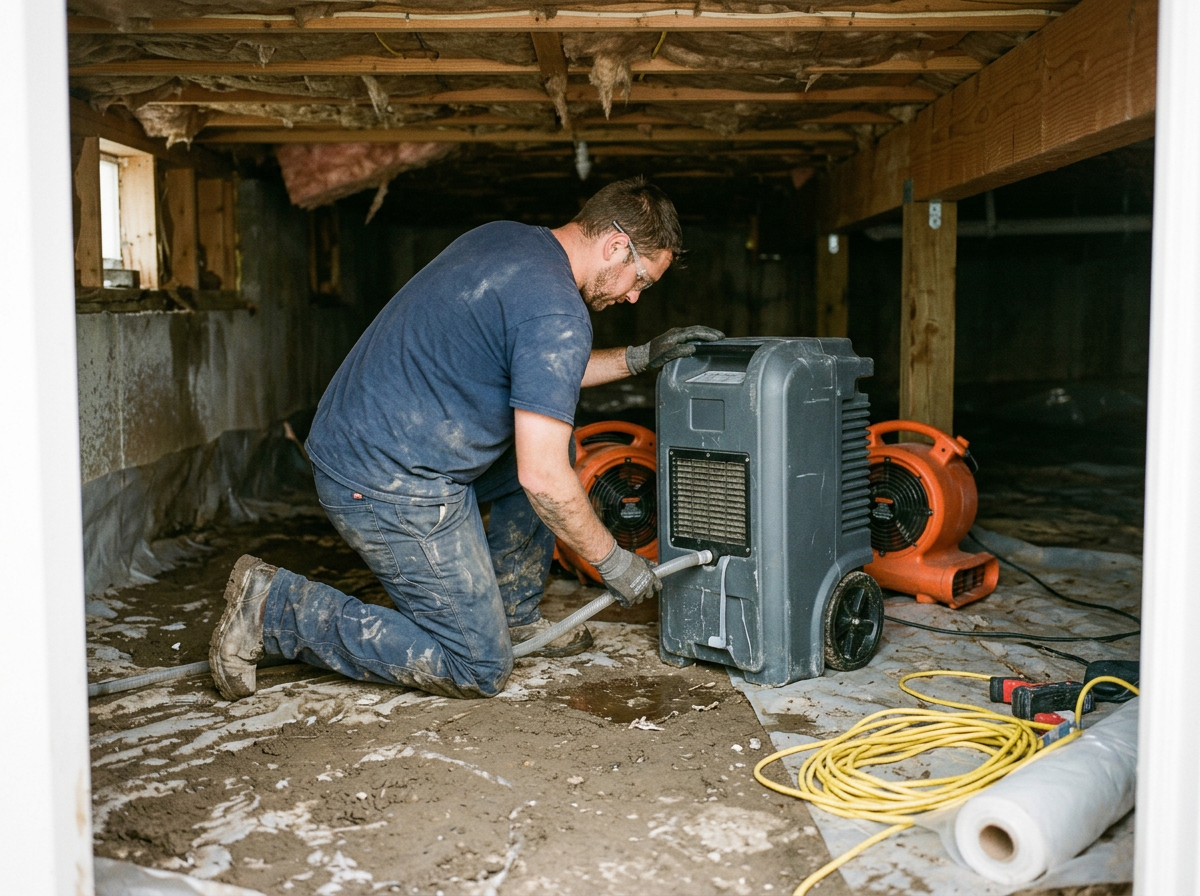
Irrigation line breaks in the Treasure Valley typically release Category 3 water from pressurized NMID or similar district lines that run through back-lot easements. This water carries soil, fertilizers and possible bacteria, so it requires full extraction rather than simple drying. Technicians begin with containment to prevent spread into living areas, then use submersible pumps and wet vacuums to remove standing water from the vapour barrier before it migrates into insulation or framing.
Moisture metering follows extraction, with readings taken on joists, subfloor and rim boards every few feet. Targets are under 12 percent moisture content in wood and complete removal of water from under the vapour barrier. In Boise’s low-humidity climate surfaces can feel dry within hours while deeper material stays wet, so fans and dehumidifiers run until meters confirm safe levels. Insulation that has wicked water must be removed; joists that show only surface moisture can often be dried and treated in place.
Mould growth can begin inside the enclosed crawl space within 24 to 48 hours, especially once April-through-October irrigation season raises the shallow water table. Salvageable materials include intact vapour barriers and dry subfloor sections; saturated batt insulation, heavily wetted particleboard and any mould-stained wood are removed. Safety steps include checking for electrical hazards near wet joists and using PPE when disturbing contaminated material. Homeowners receive a written moisture log and photo documentation that insurers require for claims.
Winter freezes can also burst exterior irrigation lines or unheated supply pipes, with damage appearing only after thaw. The same extraction and drying sequence applies, but crews add attention to garage stem walls and exterior wall cavities common in 2000s tract homes in Meridian, Kuna and Star.
Technician insight
In Boise the thing that catches most people out with Irrigation Line Break Cleanup is how fast the low valley humidity makes the vapour barrier feel dry while the soil and joist bottoms stay wet; homeowners in Meridian and Kuna subdivisions often wait until the floor feels soft before calling, and by then the April-through-October NMID break has already pushed mould into the insulation.
Meridian Tract Home Irrigation Break
A pressurized NMID line in the back easement failed in July, sending water under the vapour barrier of a 2015 Meridian crawl space. Meters showed 22 percent moisture in rim joists and saturated insulation along two walls. Crews extracted the water, removed the wet batts, ran drying equipment for four days and replaced the liner, bringing all readings below 12 percent before any mould appeared.
Irrigation Line Break Cleanup Services We Offer
✓Crawl Space Standing Water Extraction
Rapid removal of pooled irrigation water from vapour barriers and soil using pumps sized for shallow valley lots.
✓Vapour Barrier Removal and Replacement
Extraction of saturated liners followed by installation of new 6-mil or thicker barriers sealed to foundation walls.
✓Insulation Removal From Wet Joists
Selective cut-out of water-logged batts and blown-in material that would otherwise trap moisture against framing.
✓Joist and Subfloor Moisture Mapping
Detailed meter readings and documentation of moisture migration into structural wood after an NMID line break.
✓Crawl Space Drying with Targeted Airflow
Placement of air movers and dehumidifiers to reach hidden cavities while protecting finished floors above.
✓Post-Break Mould Prevention Treatment
Application of EPA-registered antimicrobials to dried surfaces once moisture targets are met.
Irrigation Line Break Cleanup Cost in Boise, ID
| Service | Typical Range | What Affects It |
|---|---|---|
| Initial Assessment And Documentation | $150–$350 | Includes moisture mapping and photos; higher for limited-access older North End homes. |
| Crawl Space Extraction | $400–$900 | Depends on gallons removed and whether district line is still flowing. |
| Insulation Removal And Disposal | $300–$700 | Based on linear feet of joist bays affected. |
| Full Drying Equipment Package | $600–$1,400 | Daily rate for fans, dehumidifiers and monitoring; longer runs in high water-table months. |
| Vapour Barrier Replacement | $450–$850 | Material and labor for typical 1,200 sq ft tract-home crawl space. |
Ranges are typical for Boise, ID and confirmed with an exact written quote before any work starts.
How it works
- 1
On-Site Assessment
Locate the break, classify water category and map affected square footage in the crawl space.
- 2
Water Extraction
Pump and vacuum standing water from the vapour barrier and soil before it spreads.
- 3
Material Removal
Cut out saturated insulation and any non-salvageable wood while protecting electrical runs.
- 4
Drying And Monitoring
Set drying equipment and take daily moisture readings until wood and soil reach target levels.
- 5
Documentation Handover
Provide moisture logs, photos and a summary for insurance submission.
Pricing
Pricing varies by access difficulty, volume of water and whether insulation or vapour barrier replacement is required.