Category 1 clean water from irrigation line breaks or winter pipe bursts requires fast extraction to keep materials from crossing into contamination. Category 2 gray water from septic or appliance overflows demands containment and antimicrobial steps during drying. Category 3 black water from floods needs full removal of saturated porous materials and negative-air protocols. Each category sets different drying targets and equipment sequences before dehumidifiers can begin.
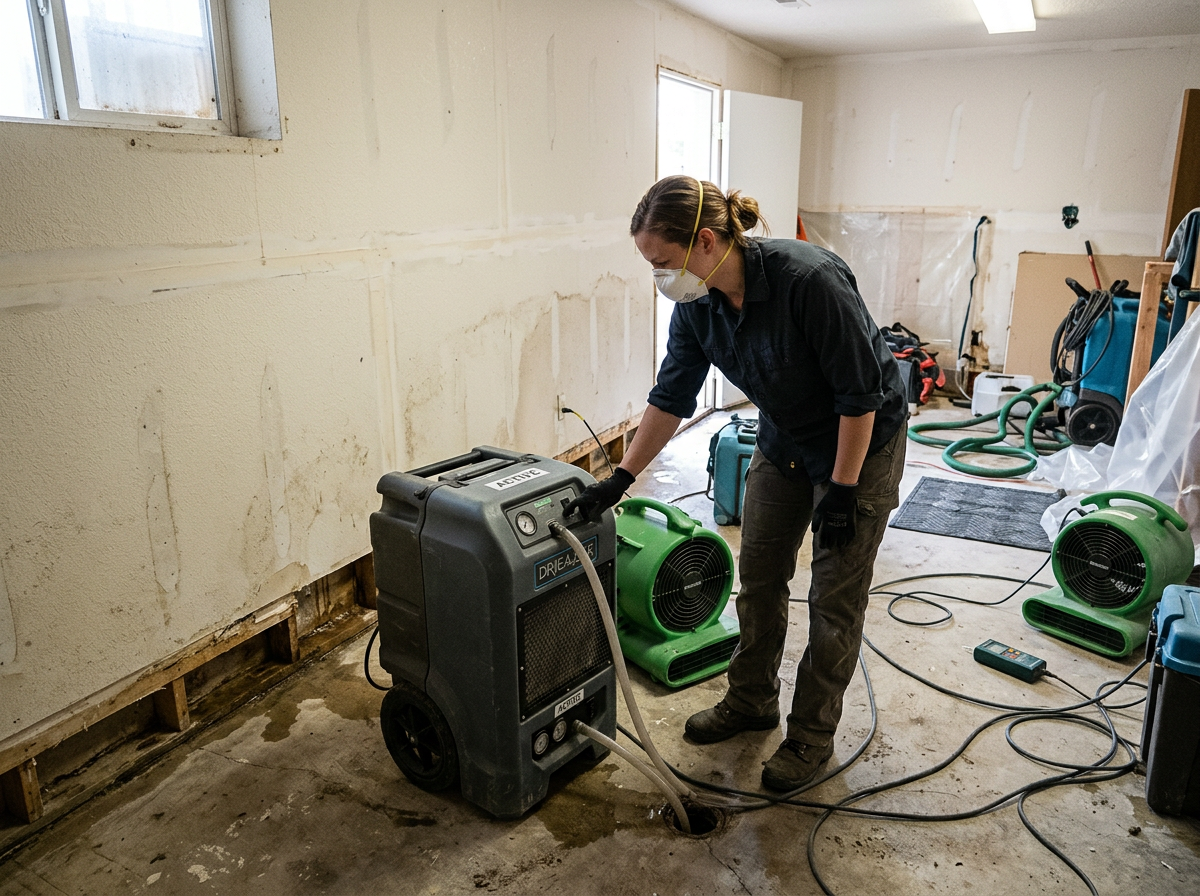
Technicians start with standing-water extraction using truck-mounted pumps, then place air movers and commercial dehumidifiers sized to the volume. Pin and non-invasive moisture meters track wood moisture content down to 12-14 percent and drywall to under 1 percent above ambient. Vapor barriers are lifted only where needed so air can reach soil and joists; insulation is removed when saturation exceeds salvage limits. Boise's low humidity speeds surface drying but leaves framing wet inside enclosed crawl spaces, so meters guide when to stop.
Plywood subfloor and dimensional joists can usually be dried in place if caught before 48 hours. Saturated fiberglass batts, particleboard, and carpet pad must be cut out. In Meridian and Kuna tract homes built after 1993, shallow NMID irrigation lines crossing back-lot easements commonly dump hundreds of gallons under vapor barriers during April-October, saturating insulation from below until floors feel soft. Winter freezes in North End bungalows and mountain cabins burst pipes in unheated crawl spaces, with damage showing only on thaw.
Technicians wear PPE when mold is visible or odors are present. Documentation for insurance includes daily moisture logs, photos of meter readings, equipment placement maps, and before-and-after conditions. These records match what adjusters request for claims on properties from Parma wells to McCall seasonal homes.
Technician insight
In Boise the thing that catches most people out with Structural Drying and Dehumidification is the April-to-October irrigation season. Shallow NMID lines break in back-lot easements and send water under vapor barriers in Meridian and Kuna tract homes; the low valley humidity dries the plastic fast while joists and insulation stay wet, so homeowners think the problem is gone until the floor softens.
Meridian Irrigation Line Break
A pressurized irrigation line failed behind a 2012 Meridian home and flooded the crawl space. We found several inches of water sitting on the vapor barrier with saturated insulation against the joists. Extraction, targeted airflow and daily metering brought moisture content below target levels in six days; the subfloor and framing were saved without mold growth.
Structural Drying and Dehumidification Services We Offer
✓Crawl Space Drying After Irrigation Breaks
Removes water from vapor barriers and soil after NMID or district line failures common in Meridian and Kuna subdivisions.
✓Subfloor Moisture Extraction
Pulls moisture from plywood and joists before it reaches finished flooring in 1990s-2020s tract homes.
✓Winter Pipe Burst Drying
Dries unheated crawl spaces, garages and exterior walls after freeze-thaw events in North End and mountain properties.
✓Insulation Removal and Drying Coordination
Extracts saturated batts that trap moisture against joists and arranges replacement once framing reaches target moisture levels.
✓Agricultural Property Drying
Handles well or septic water intrusion on Parma, Melba and Wilder properties where septic systems affect drying protocols.
Structural Drying and Dehumidification Cost in Boise, ID
| Service | Typical Range | What Affects It |
|---|---|---|
| Crawl Space Drying (under 1,000 sq ft) | $900–$1,800 | Higher when insulation must be removed or access is tight |
| Subfloor and Joist Drying | $1,200–$2,400 | Varies with number of wet bays and equipment runtime |
| Post-Irrigation Break Drying | $800–$2,200 | Volume of water and soil saturation affect runtime |
| Winter Pipe Burst Drying | $700–$1,600 | Freeze locations in exterior walls raise equipment needs |
Ranges are typical for Boise, ID and confirmed with an exact written quote before any work starts.
How it works
- 1
Site Assessment and Metering
Technicians map water extent, test moisture in soil, joists and subfloor, and classify the water category.
- 2
Water Extraction
Standing water is pumped out and vapor barriers are adjusted to expose wet soil and framing.
- 3
Equipment Placement
Air movers and dehumidifiers are positioned for directed airflow across crawl space surfaces.
- 4
Daily Monitoring
Moisture readings are logged until wood and subfloor meet drying targets.
- 5
Final Clearance
Final meter verification and documentation are provided for insurance or homeowner records.
Pricing
Cost depends on square footage, water category, and access depth; estimates are given after on-site inspection.