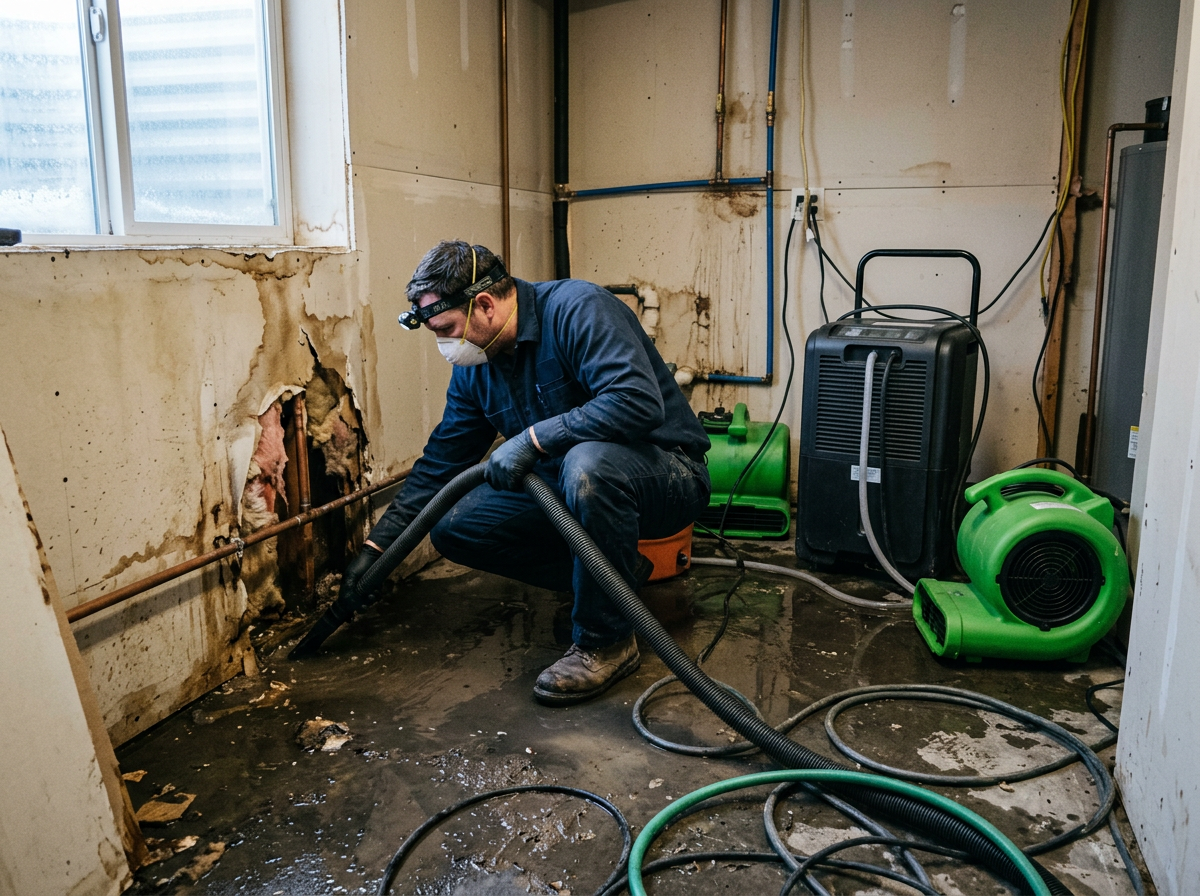
Category 3 water from a burst pipe in an unheated crawl space requires immediate extraction because it often carries contaminants from soil or irrigation lines. Technicians first isolate the source, then use submersible pumps and wet vacuums to pull standing water off the vapour barrier before it migrates into insulation or framing. In Treasure Valley homes built after 1993, shallow NMID irrigation lines frequently fail between April and October, flooding back-lot easements and pushing hundreds of gallons into the crawl space overnight.
Once bulk water is removed, moisture meters map saturation in joists, subfloor and rim boards because Boise’s semi-arid air at 2,700 ft lets surfaces feel dry while deeper wood remains wet. Air movers and commercial dehumidifiers run until readings drop below 12 percent moisture content, a target that prevents mould growth inside the enclosed space where humidity can linger for days. Salvageable materials include intact vapour barriers and pressure-treated joists; saturated fiberglass insulation and particleboard subfloor must be cut out and disposed of.
Safety protocols include checking for electrical hazards near wet framing and ventilating the crawl space before entry. Homeowners receive a drying log with daily meter readings, photos of removed materials and a scope of work that insurance adjusters accept for claims on North End bungalows or newer Meridian tract homes. Work stops only after a final walkthrough confirms the space meets industry drying standards.
Winter freezes in unheated crawl spaces under 1900s–1940s East End homes often produce slow leaks that appear only after the thaw, so crews also inspect exterior walls and garages where pipes run without heat.
Technician insight
In Boise, the thing that catches most people out with Frozen Pipe Burst Cleanup is how quickly the low valley humidity dries the surface of the vapour barrier while the joists and subfloor stay wet, especially in 2000s tract homes in Meridian and Kuna where shallow irrigation lines sit right under the back easement.
North End Bungalow Freeze
A 1940s North End bungalow lost heat during a January cold snap; a pipe in the tight crawl space froze and burst. Water pooled on the vapour barrier and wicked into rim joists. Crews extracted the water, removed saturated insulation, dried the framing to below 12 percent, and replaced the barrier. The homeowner received drying logs that supported the insurance claim without further issues.
Frozen Pipe Burst Cleanup Services We Offer
✓Crawl Space Water Extraction
Removes standing water from vapour barriers and soil before it saturates insulation or joists in Treasure Valley crawl spaces.
✓Moisture Mapping and Metering
Uses pin and pinless meters to locate hidden saturation in subfloor and framing that low Boise humidity conceals.
✓Insulation Removal and Disposal
Cuts out and hauls away wet fiberglass or cellulose insulation that will otherwise support mould within 48 hours.
✓Vapour Barrier Replacement
Installs new 6-mil or thicker vapour barrier after drying to block ground moisture in shallow water-table areas.
✓Structural Drying Setup
Places air movers and dehumidifiers to pull moisture from joists and rim boards without over-drying finished floors above.
✓Pipe Burst Documentation Package
Supplies dated photos, moisture logs and material lists formatted for insurance claims on local properties.
Frozen Pipe Burst Cleanup Cost in Boise, ID
| Service | Typical Range | What Affects It |
|---|---|---|
| Crawl Space Extraction | $650–$1,800 | Higher when irrigation line break floods multiple bays or access is limited under older North End homes |
| Full Drying Package | $900–$2,400 | Includes equipment, daily monitoring and moisture logs for typical Meridian tract home |
| Insulation Removal | $400–$1,100 | Based on linear feet and disposal fees; often required after winter freeze events |
| Vapour Barrier Replacement | $350–$750 | New 6-mil barrier installed after drying; price rises with difficult terrain or agricultural properties |
Ranges are typical for Boise, ID and confirmed with an exact written quote before any work starts.
How it works
- 1
24/7 Response And Source Isolation
Technician arrives within hours, shuts off water if accessible, and protects unaffected areas before entering the crawl space.
- 2
Standing Water Removal
Pumps and wet vacuums extract water from the vapour barrier and soil while containing any Category 3 contaminants.
- 3
Moisture Assessment
Meters check joists, subfloor and insulation to determine what must be removed versus what can dry in place.
- 4
Drying And Monitoring
Equipment runs until targets are met, with daily readings recorded for the homeowner and insurer.
- 5
Final Clearance
Space is reinspected, new vapour barrier installed if needed, and full documentation delivered before equipment removal.
Pricing
Pricing varies by crawl space access, volume of water and whether insulation or subfloor must be removed.