Mold remediation in Treasure Valley homes usually begins with water that has already been sitting on a crawl space vapour barrier. Category 2 gray water from a broken NMID or similar pressurized irrigation line introduces organics that feed rapid growth once temperatures allow. Category 3 black water from septic or heavy surface intrusion requires full removal of affected soil and insulation rather than surface cleaning. In both cases the 24-to-48-hour window inside an enclosed crawl space is the critical period before colonies establish on joists and subfloor.
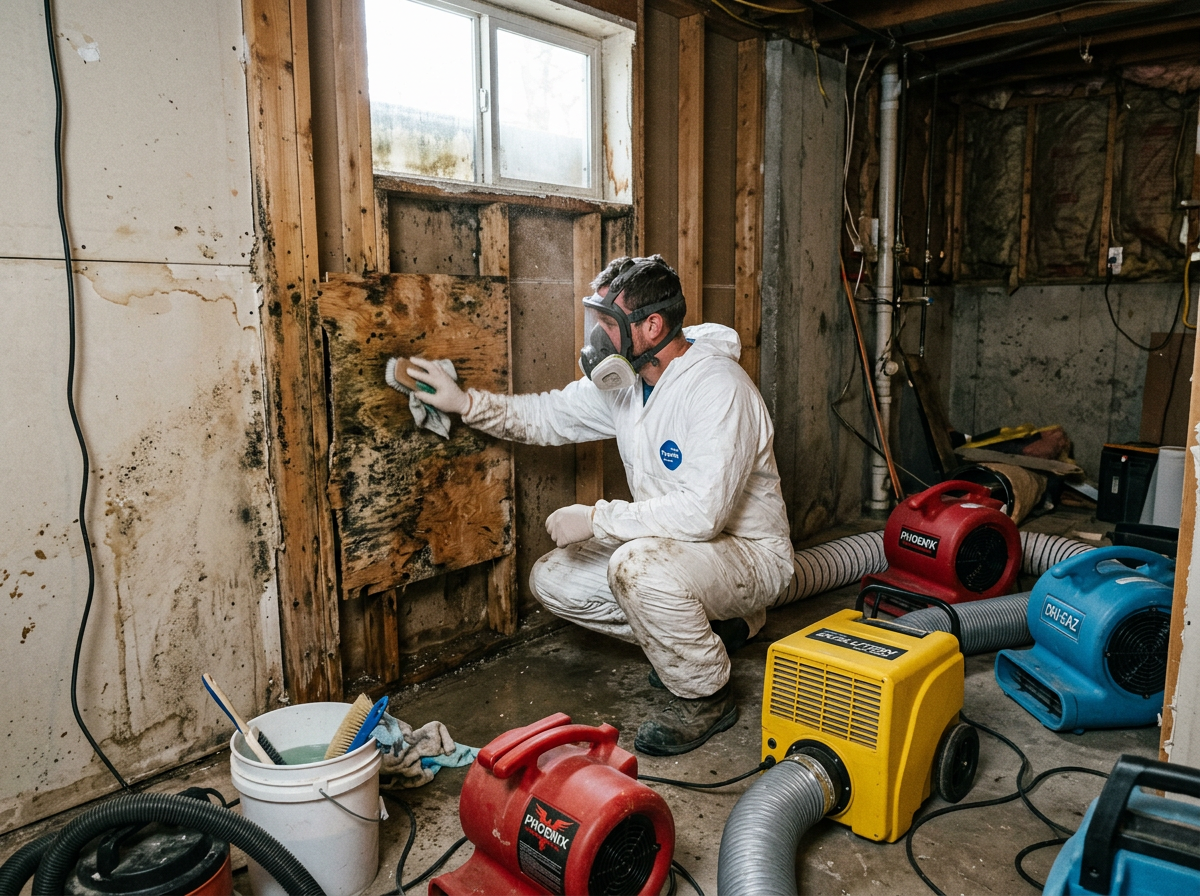
Work starts with moisture metering of joists, subfloor and insulation from below. Technicians map wet versus dry zones, then set containment before any removal. Air movers and dehumidifiers run until wood moisture content returns to the 10-12 percent range typical for Boise’s semi-arid climate; surfaces can read dry while framing underneath remains elevated. Insulation that has wicked water is cut out in sections; solid joists are cleaned and treated when readings allow salvage.
Safety protocols include full PPE and negative air when visible growth or musty odour is present. Homeowners are advised not to disturb the area, as spores can move into living spaces through floor registers or unsealed penetrations. Documentation for insurance includes pre- and post-remediation moisture logs, photographs of removed materials, and a written scope that notes the irrigation district or seasonal water-table source rather than generic basement language.
Final clearance requires both visual inspection and post-drying meter verification across multiple joist bays. Reinstallation of new vapour barrier and insulation follows only after the structure is confirmed dry, preventing repeat growth during the next April-to-October irrigation season.
Technician insight
In Boise the thing that catches most people out with Mold Remediation is how the low humidity makes the top of the vapour barrier feel dry while the joists and subfloor underneath stay wet for weeks after an April irrigation break.
Meridian Irrigation Break Crawl Space
A pressurized line in a back easement leaked for several days into the crawl space of a 2012 Meridian home. Moisture had wicked into the insulation and begun growing on the underside of the subfloor. We mapped the wet bays, removed the saturated insulation, dried the framing to target moisture content, and installed a new sealed vapour barrier before any odour reached the living area.
Mold Remediation Services We Offer
✓Crawl Space Mold Remediation
Removes growth from joists and subfloor after irrigation or water-table intrusion while preserving structural access in tight 1990s-and-newer Meridian and Kuna homes.
✓Irrigation Leak Mold Cleanup
Addresses mold that develops when NMID or district pressurized lines break and pool on the vapour barrier across back-lot easements in Star, Middleton and Boise subdivisions.
✓Vapour Barrier Replacement After Mold
Replaces saturated or contaminated barriers and installs new sealed material once framing is dried and cleared to stop future moisture drive from the valley water table.
✓Insulation Removal and Disposal
Extracts water-saturated fiberglass or cellulose from crawl spaces where hidden saturation has already supported mold colonies on the underside of subfloor.
✓North End and East End Bungalow Mold Work
Handles confined crawl spaces in older 1900s-1940s homes where tight access and original construction make full inspection and targeted removal necessary.
Mold Remediation Cost in Boise, ID
| Service | Typical Range | What Affects It |
|---|---|---|
| Standard Crawl Space Mold Remediation | $1,400–$3,200 | Typical 800–1,200 sq ft Meridian tract home; price rises with difficult access or extensive insulation removal. |
| Irrigation Line Break Cleanup | $1,800–$4,100 | Includes source identification and larger material disposal when hundreds of gallons have entered the space. |
| Vapour Barrier And Insulation Replacement | $900–$2,400 | Added after clearance; varies by material grade and whether joist bays require full re-insulation. |
| Older Bungalow Confined-Space Work | $2,100–$3,800 | North End and East End homes with limited entry points and mixed original materials. |
Ranges are typical for Boise, ID and confirmed with an exact written quote before any work starts.
How it works
- 1
Site Assessment And Moisture Mapping
Technicians enter the crawl space with meters and document wet zones on joists, insulation and soil without disturbing growth.
- 2
Containment And Safety Setup
Plastic barriers and negative air are established to keep spores from migrating into living areas during removal.
- 3
Material Removal And Cleaning
Saturated insulation and heavily affected wood sections are removed; remaining surfaces are cleaned and treated per current moisture readings.
- 4
Drying Verification And Clearance
Equipment runs until wood moisture content stabilizes; final meter checks and photos confirm the space is ready for new vapour barrier.
Pricing
Cost depends on square footage accessed, depth of insulation removal, and whether the source was an irrigation break or seasonal water table rise.