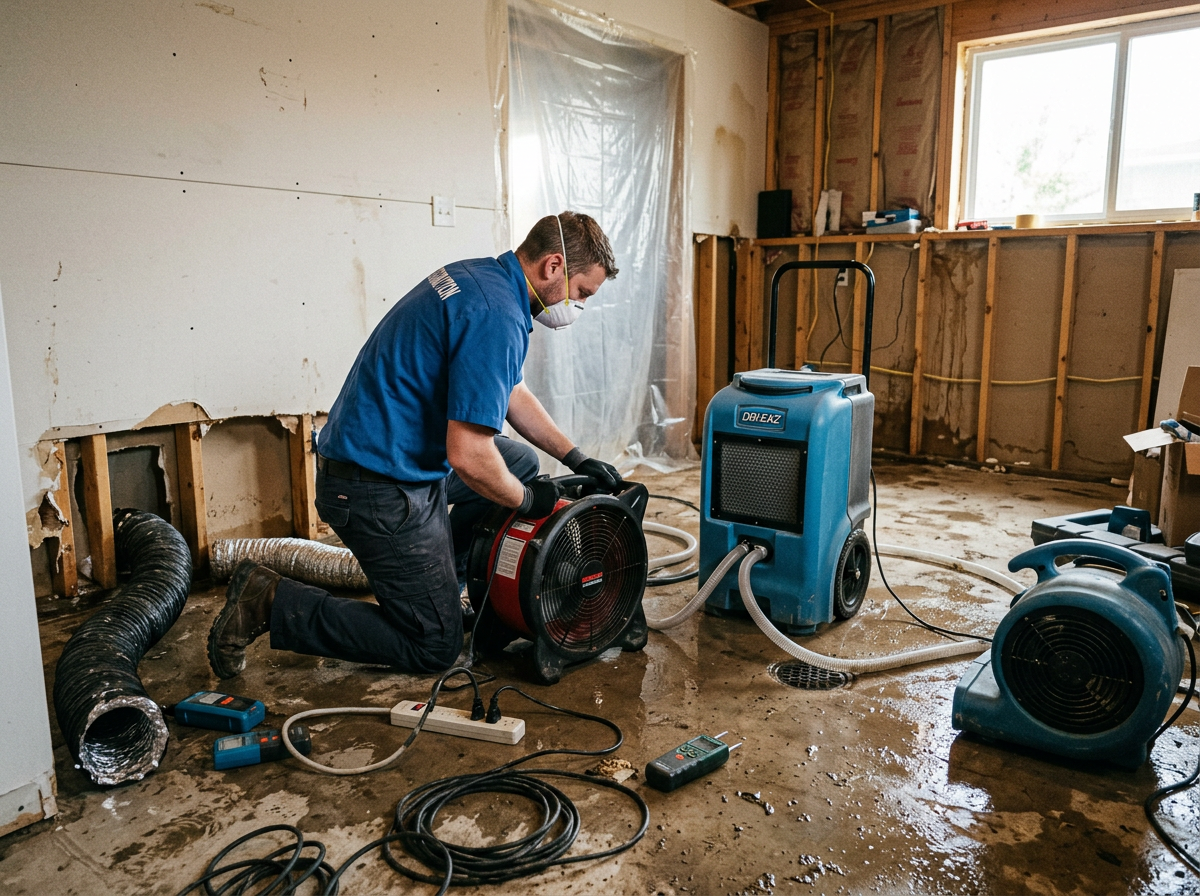
Placerville sits in the Boise County mountains with older cabins and homes on wells and septic, exposed to hard winter freezes that burst pipes when properties sit empty for weeks. Seasonal vacation homes here create a distinct restoration challenge because leaks often go undetected until significant structural damage occurs. Crews traveling from the Boise base face one- to two-hour drives over winding roads, so early detection and clear access planning matter more than in closer valley towns.
Work in Placerville focuses on freeze-damaged supply lines inside unheated cabins, moisture trapped under older wood floors, and limited turnaround space on narrow historic lots. Without pressurized irrigation systems, the main water sources remain private wells, which changes how technicians isolate and dry affected areas compared with tract homes in Meridian or Eagle. Response teams prioritize rapid moisture mapping and targeted drying to prevent mold in tightly built mountain structures.
Treasure Valley Water Damage provides round-the-clock service every day of the week, dispatching directly to Placerville from the Boise shop when calls come in from remote cabin owners. Technicians familiar with long drive times and mountain access bring equipment sized for single-load trips and focus on thorough drying before winter weather returns.
Around Placerville
We regularly work near:
- 📍Main Street
- 📍Placerville Cemetery
- 📍Historic townsite along Idaho City-Placerville Road
- 📍Boise National Forest boundary access roads
Water Damage Restoration in Placerville — Local Notes
- •Hard freezes in unoccupied seasonal cabins frequently cause supply-line bursts that go unnoticed for weeks, requiring extended drying under floors and in wall cavities.
- •Narrow historic lots and steep driveways limit equipment staging, so crews often stage at the road and carry tools and dehumidifiers by hand.
- •Private wells and septic systems mean no municipal shutoffs; isolation requires locating and securing individual pressure tanks before extraction begins.
- •One- to two-hour drive times from Boise require pre-staged equipment loads and same-day return trips to avoid stranding crews during early snow events.