Mountain Home AFB sits on high desert ground where winter lows regularly dip below freezing. Slab-on-grade military family housing dominates the base, with municipal water and no pressurized irrigation systems. When pipes burst during a cold snap, water spreads quickly across concrete floors and into wall cavities without the crawl-space drainage common in Meridian or Kuna.
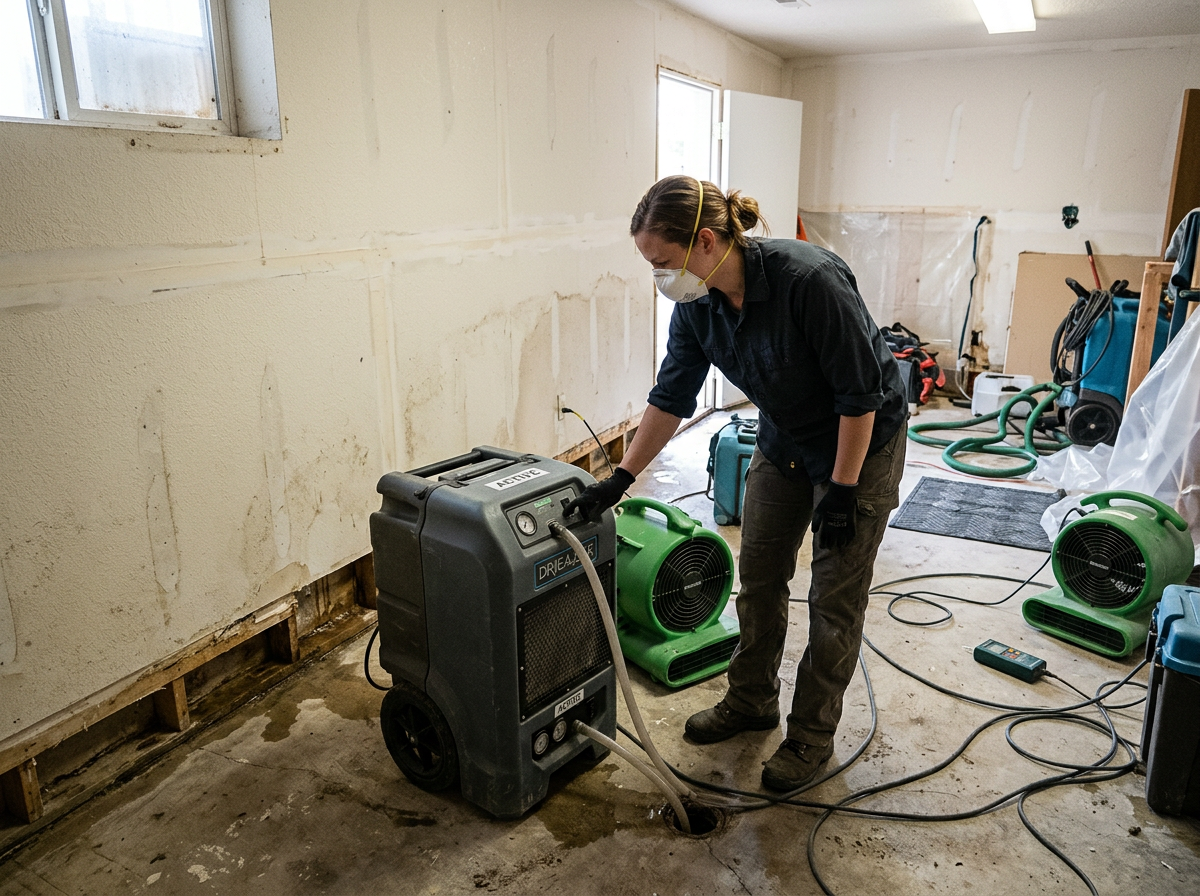
Treasure Valley Water Damage runs 24 hours Monday through Sunday from Boise, reaching the base gate in roughly fifty minutes. Base security requires advance coordination for equipment and personnel, and crews must stage outside the perimeter until cleared. Extraction and drying focus on rapid moisture removal to protect both government housing and personal belongings inside tightly sealed units.
Seasonal vacancy is rare here unlike mountain cabins farther north. Most homes stay occupied year-round by active-duty families, so jobs center on quick response to limit disruption rather than long-term unoccupied leaks. Hard water from the municipal supply can also leave mineral deposits that slow drying if not addressed during initial extraction.
Around Mountain Home AFB
We regularly work near:
- 📍Gunfighter Avenue
- 📍MHAFB Elementary School
- 📍Base Commissary
- 📍Base Exchange
- 📍Mountain Home AFB Hospital
Water Damage Restoration in Mountain Home AFB — Local Notes
- •Slab construction means moisture often travels under flooring into adjacent units; infrared scans are needed before cutting carpet.
- •Winter pipe bursts spike after nights below 15 degrees; crews carry extra dehumidifiers because desert air still holds residual moisture.
- •Access through the main gate adds 30-45 minutes per trip; all equipment is pre-staged at the visitor center lot to stay within base rules.
- •No irrigation flooding occurs, but wind-driven dust can contaminate wet materials, requiring extra HEPA filtration during demolition.