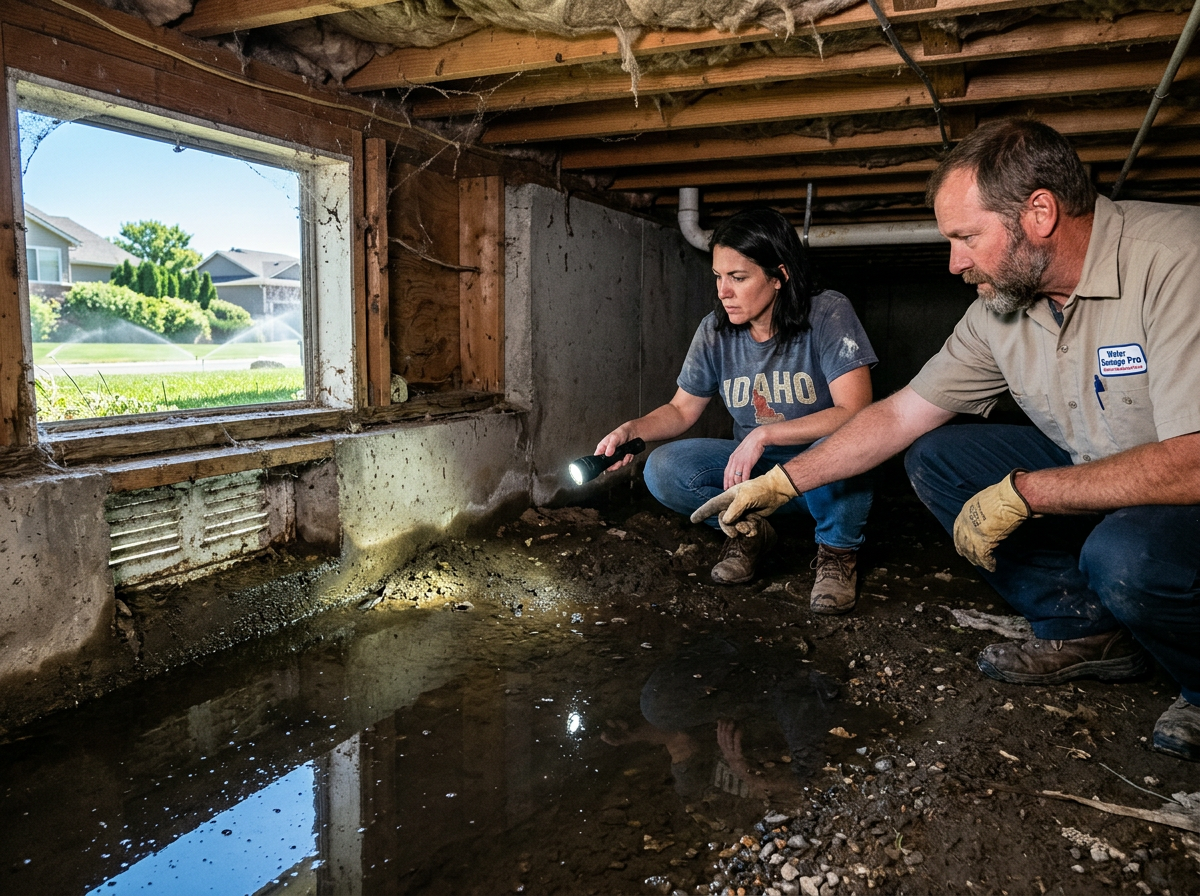
Grand View sits on the high desert south of Boise as a small farming community of older homes on private wells and septic systems rather than municipal water or pressurized irrigation. Most properties use crawl spaces rather than slabs, and irrigation ditches or well-line failures create the main water intrusion patterns crews encounter. Response teams must plan for drive times exceeding one hour, bringing extra pumps and containment gear because local roads limit quick resupply.
Work here centers on older single-story farmhouses and manufactured homes where water can migrate under pier-and-beam foundations or into septic drain fields. Crews avoid aggressive extraction that could overload aging septic tanks and instead use targeted drying focused on crawl-space joists and subflooring. Seasonal freezes can crack well lines that sit unused for days, so inspections always include the well house and pressure tank area.
Because Grand View lacks the tract-home density of Meridian or Kuna, each job requires site-specific mapping of lot drainage and neighboring ditch flow. Technicians document well-head locations and septic layouts before starting so restoration does not disturb underground utilities common on these larger rural parcels.
Around Grand View
We regularly work near:
- 📍Grand View Elementary School
- 📍Main Street
- 📍Grand View Post Office
- 📍Snake River boat ramp access south of town
- 📍Owyhee County Road 20
Water Damage Restoration in Grand View — Local Notes
- •Older farmhouses on wells and septic require careful extraction to avoid overloading drain fields or contaminating private water sources.
- •Crawl spaces under pier-and-beam homes collect water from irrigation ditches rather than pressurized systems, changing drying equipment placement.
- •Drive times from Boise often exceed one hour, so crews carry redundant pumps and containment supplies for single-trip efficiency.
- •Winter well-line freezes in unoccupied farm homes can leak for days before discovery, demanding thorough subfloor moisture mapping.