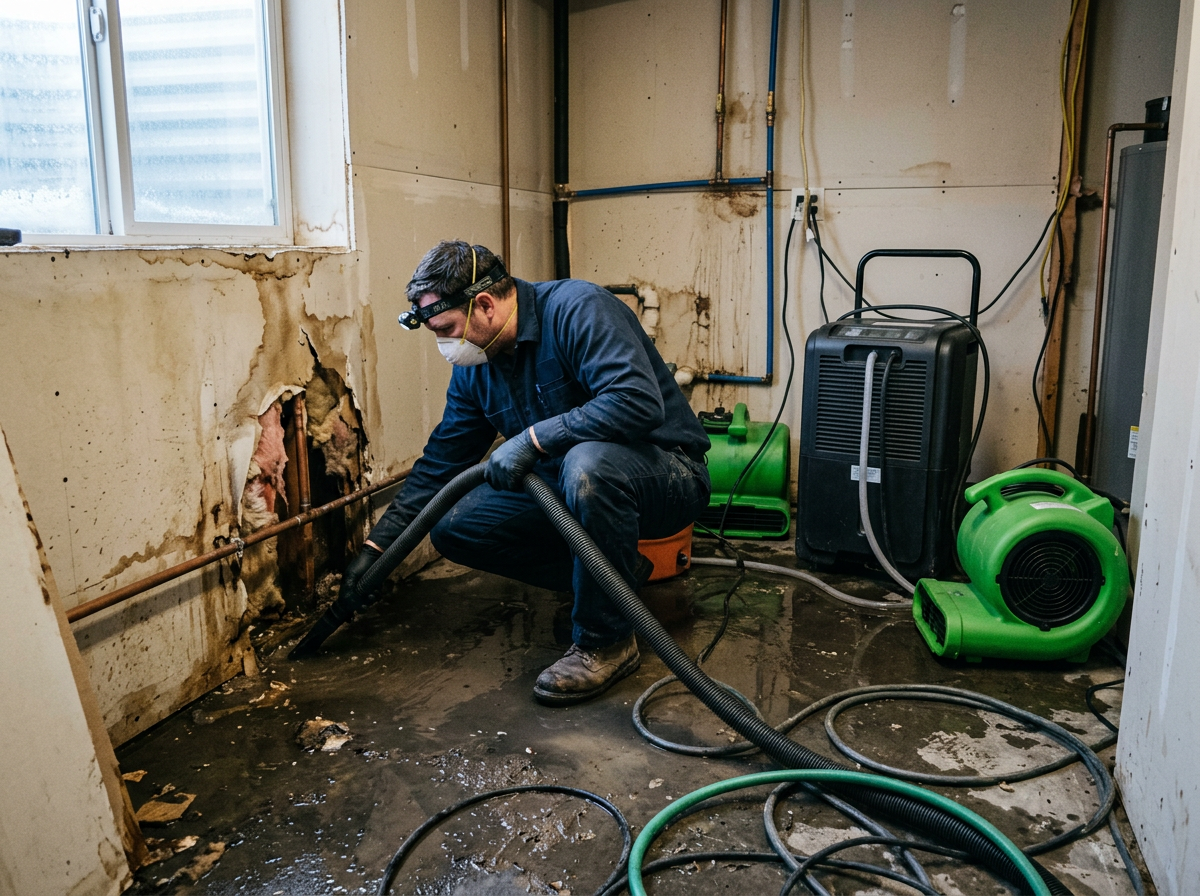
Fruitland sits on the agricultural fringe with older single-story homes on wells and septic systems rather than municipal pressurized irrigation. This means crawl-space flooding here usually traces to roof leaks, plumbing failures, or poor lot drainage instead of the irrigation-season surges common farther east in Meridian or Kuna. Winters bring hard freezes that can split pipes in unheated utility rooms, and the drive from the Boise shop runs about fifty-five minutes once crews hit Highway 95.
Because many Fruitland properties still use concrete stem walls with dirt crawl spaces, technicians often spend extra time isolating wet soil from wooden joists before drying begins. Septic tanks and drain fields also limit where extraction equipment and dehumidifiers can be staged without risking system overload. Seasonal farm work keeps some houses empty for days, so moisture alarms and quick shut-off valves become practical additions after initial drying.
Access on narrow rural driveways and gravel approaches around older orchards can slow equipment rollout compared with newer subdivisions. Crews therefore stage the larger air movers and moisture meters first, then return with any needed flooring or insulation removal once the water source is confirmed.
Around Fruitland
We regularly work near:
- 📍Fruitland City Park
- 📍Fruitland High School
- 📍Fruitland Elementary School
- 📍US Highway 95 through downtown
- 📍Payette River bridge at the city edge
Water Damage Restoration in Fruitland — Local Notes
- •Older Fruitland homes on wells and septic lack the pressurized irrigation that floods crawl spaces in post-1993 Meridian tracts.
- •Hard winter freezes routinely split pipes in unheated utility rooms and crawl spaces because many homes lack modern insulation.
- •Narrow gravel driveways and orchard setbacks require smaller equipment staging and longer setup times than suburban lots.
- •Long drive from Boise means crews prioritize one-trip drying plans with extra moisture monitoring for unoccupied farmhouses.